Have you ever watched a child struggle with a task that seemed insurmountable, only to witness them conquer it with ease a few days, weeks, or months later?
 |
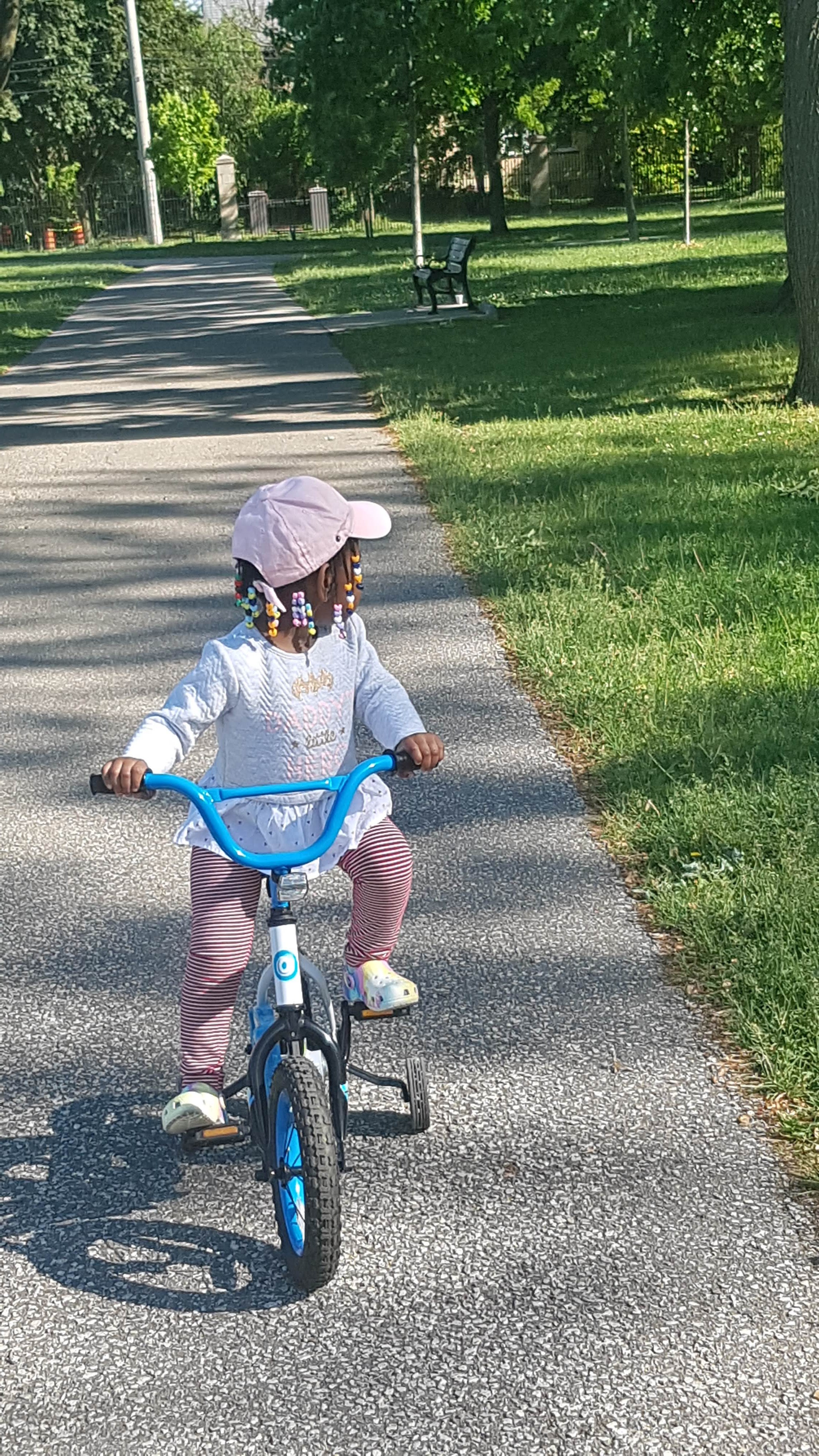
2yr old bike riding (with training wheels)
after many tries at pedaling |
This phenomenon highlights the remarkable principle of children's learning and development: the journey from difficulty to mastery.
In this blog, we'll dive into the fascinating world of how children navigate challenges, demonstrating that what appears difficult today can become effortless with time, patience, and perseverance.
The Learning Curve:
Children are natural learners, and every new experience is an opportunity for growth. Yet, they often encounter tasks that initially appear daunting. These can range from tying shoelaces and riding a bicycle to learning to read or solve complex math problems. What makes these challenges so intriguing is the way children evolve through a learning curve.
1.
Initial Struggles: When faced with a new task, children may struggle, feel frustrated, or even express reluctance. For instance, a child trying to tie shoelaces may fumble with the loops and knots repeatedly.
2.
Repetition and Practice: The key to mastering any skill is repetition and practice. Children tend to revisit the task, sometimes with guidance from parents or teachers. They gradually become more familiar with the process.
3.
Incremental Improvement: Over time, children begin to notice incremental improvements in their abilities. The knots get neater, or they start recognizing familiar words when reading.
4.
Confidence and Fluency: As their competence grows, so does their confidence. Children no longer view the task as an insurmountable challenge. Instead, they approach it with a sense of ease and fluency.
 |
3 yr old practicing number writing
with Ticonderoga pencil and pencil grip |
The Role of Patience and Encouragement:
Parents, caregivers, and educators play a crucial role in this journey. They can provide the necessary support and encouragement, creating an environment where children feel safe to explore, learn, and grow.
1.
Patience: Adults should exhibit patience when children face difficulties. Avoiding frustration and criticism allows kids to persist without fear of failure.
2.
Positive Reinforcement: Praising effort rather than innate talent can boost a child's motivation. It helps them understand that improvement comes with hard work and perseverance.
3.
Setting Realistic Expectations: It's essential to set age-appropriate expectations. Not every child progresses at the same pace, so comparing them to others can be counterproductive.
4.
Creating a Learning-Friendly Environment: Fostering curiosity, providing access to resources, and allowing children to explore their interests can make the learning process more enjoyable.
 |
| 2 yr old learning to colour by copy colouring |
Examples from Real Life:
Let's consider a few real-life examples of how children conquer challenges over time:
1. Learning to Ride a Bicycle: Initially, learning to pedal or balancing on two wheels seems impossible, but with practice, children develop the motor skills and confidence needed to ride independently.
2. Reading and Writing: At the start, decoding letters and forming words can be bewildering. However, as children practice, they become avid readers and proficient writers.
3. Mastering a Musical Instrument: Playing an instrument demands patience and practice. Over time, children transform from beginners to skilled musicians.
4. Learning to Draw, Colour or Paint: Great art is intricate, detailed and requires focus and attention. With sustained practice and effort, children can gradually improve on their artistic skills and create pieces far beyond their years.
Take Away
The principle of children finding it difficult to do something today but mastering it later illustrates the incredible capacity for growth and adaptation that all humans (children included) possess.
It serves as a reminder that learning is a journey filled with challenges, but with time, dedication, and support, children can turn these difficulties into triumphs.
As parents, caregivers, and educators, we have an inportant role to play in nurturing this process, helping children build not only skills but also resilience and confidence that will serve them well throughout their lives.
So, the next time you witness a child struggling with a task, remember that it's all part of their remarkable learning journey.


Comments
Post a Comment